
Macular Degeneration
Macular degeneration is one of the leading causes of vision loss in adults over 50, affecting the central part of your vision that is essential for activities such as reading, driving, and recognizing faces. At Vision Care Center, Dr. Madeline Bartels uses advanced diagnostic technology to monitor retinal health and detect macular degeneration in its earliest stages.
What Is Macular Degeneration?
Macular degeneration is a progressive eye condition that affects the macula, the small central portion of your retina responsible for sharp, detailed vision.
When the macula deteriorates, you may notice difficulty reading, recognizing faces, or seeing fine details, even though your peripheral vision typically remains intact. Vision Care Center provides advanced retinal monitoring to help detect and track macular degeneration early, when intervention can make the most difference.
The condition primarily occurs in two forms:
Dry macular degeneration, the most common type, develops gradually as the macula thins with age.
Wet macular degeneration, though less common, progresses more rapidly and occurs when abnormal blood vessels grow beneath the retina, leaking fluid that damages the macula.
Both forms are often referred to as age-related macular degeneration, or AMD, since they typically develop after age 50.
The earlier the condition is detected, the more options you have to slow its progression and protect your sight.
Advanced Diagnostic Technology
At Vision Care Center, Dr. Madeline Bartels uses advanced imaging tools to take a close, detailed look at the health of your retina. These technologies make it possible to spot even the smallest changes in the macula.
One of these tools, called Optical Coherence Tomography (OCT), creates highly detailed images that show the different layers of your retina. It’s similar to an ultrasound but uses light instead of sound, allowing Dr. Bartels to see fine details that help detect early signs of macular degeneration.
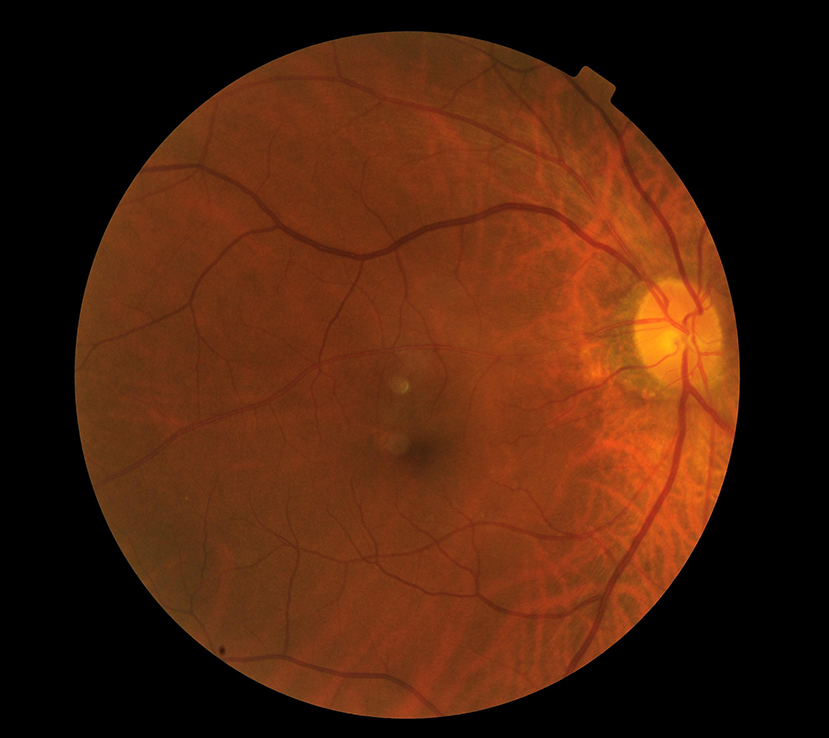
Another important tool, fundus photography, takes clear color photos of the back of your eye. These images show the retina, optic nerve, and blood vessels, creating a helpful baseline to compare from visit to visit. Tracking these changes over time gives a clearer picture of how your eyes are doing and how best to protect your vision.
Both tests are quick, completely non-invasive, and comfortable. Together, they provide a more complete view of your eye health and make it easier to detect changes early, long before they affect your vision.
When to Seek Care
Schedule an appointment with Vision Care Center if you notice any changes in your central vision, particularly if straight lines appear wavy or if you develop a dark or blank spot in the center of your visual field. These symptoms could indicate macular degeneration and warrant prompt evaluation.
Even without symptoms, adults over 50 should have comprehensive eye exams annually. Those with a family history of macular degeneration may benefit from earlier or more frequent screenings.
Dr. Bartels provides thorough retinal monitoring using OCT equipment and fundus photography, tracking any changes in your macula over time.
When retinal treatment becomes necessary, Vision Care Center works closely with retina specialists to ensure you receive appropriate care. Dr. Bartels coordinates referrals and continues to monitor your eye health throughout your treatment, providing continuity of care while ensuring you have access to specialized interventions when needed.
Schedule an appointment at Vision Care Center in Tonawanda, NY, today!